Hope

When did I first meet Hope? I was young… very young, and even then she seemed naïve. It was early morning and I awoke from my sleep in the back of our station wagon. It was time to say goodbye to my dad as he deployed. He’d be gone at least 6 months, though I had no concept of time. Hope tried to console me then I remember, but I did not know her. She was there, present the whole time, yet never the center of my attention.

That’s her way. She does not draw too much attention to herself. Hope always shows up on account of others, encouraging and supporting our love for them for their own sake. She does not make herself the center of attention, but is always there for you… in the background. It was years before I took any notice of her at all. There, years later, in a time of solitude and isolation she came into focus. And I recognized her! She had been there all along, faithfully by my side. And it was then that I came to love her.

How patient she had been, waiting for me to recognize her! And now in our union, she has produced Patience for me in my own heart. There’s no denying it, Patience is more like her mother. Soft, quiet, content just to be herself. And yet, there’s something stronger in her than I had in my own youth. She’s still young, but she’s growing.

It’s a funny thing when a father has to learn from his child. He’s been too thick headed to learn in his own childhood, so he must learn vicariously from the childhood of another. And Patience is teaching me so much! One thing that’s struck me is her indifference to time. It holds no authority over her. It has a strange hold on me as an adult, but not over her.

Even as she longs for a thing, she does not want it in her own time. Rather, she wishes to have it in its own timing, knowing that the right thing at the wrong time is the wrong thing. In this way she has taught me the value of receiving a thing and not just taking it for myself. In the receiving of a gift, I gain the thing itself, but I also gain a point of connection and relation to the giver. Patience is teaching me that. It is a lesson her mother has been trying to teach me all along.  

*Accompanying music for this post is January Wedding by the Avett Brothers. It can be found at the top right side of this post.

January Wedding, the Avett Brothers, I and Love and You

Waiting

I love gardening. And this time of the year is full of waiting! Waiting for the seedlings to grow indoors, waiting for the last frost date, waiting for rain… then getting overwhelmed with the rain and waiting for sunshine and blue skies. Waiting is in every step of the gardening process. It’s exciting and full of anticipation at times and then frustrating and infuriating at others, but there it remains… waiting all along.

Why do I do it? Why wait? Why garden at all? Wouldn’t life be much easier (and free of the burden of waiting) if I just didn’t care? Aaaah, there it is. I wait because I care, there is something in the gardening that I find valuable and worth pursuing. There is life in it for me, in cultivating the life of these plants. And not just life in the food produced, but in the entire process of gardening itself.

Ok, I care. And because I care, I pursue something worth while (here, it is gardening). And in that pursuit I must wrestle with the tension between things as they are now and my vision for what they can become. It’s risky to pursue a thing… it may not come to fruition. Of course, it’s risky to not pursue a thing too… then nothing will come to fruition. So I must befriend and learn from that virtue, Hope. The process of waiting is a process of cultivating a relationship with Hope, and learning to rest in and draw from her in times of despair. Because in the wilderness of waiting there are wolves prowling.

Fear will show up, you can count on that! Doubt too, and anxiety. These three cousins prowl about together in the wilderness of waiting, seeking whom they may devour. Anytime you care, anytime you pursue a thing of value and are in the wilderness of waiting for it, these three will show up. And it is in these times of despair that we must learn to rest in and rely on Hope! She is the light of Eärendil, that beloved star.

Perhaps that’s why I love gardening… in the times of waiting it cultivates a relationship with Hope that I desperately need. A relationship that I’ll be able to trust when the dark times in life come. When I’m tempted to abandon all to fear, doubt and anxiety, to give up caring at all. When I’m tempted to befriend more dubious characters just to avoid the loneliness in times of waiting… then I’ll know that I can rest in Hope. And through her, also gain the company of faith and love.   

*Accompanying music for this post is Connie’s Song, by Xavier Rudd. Check it out at the top right side of this post.

Connie’s Song, Xavier Rudd, Food in the Belly

A Season of Life

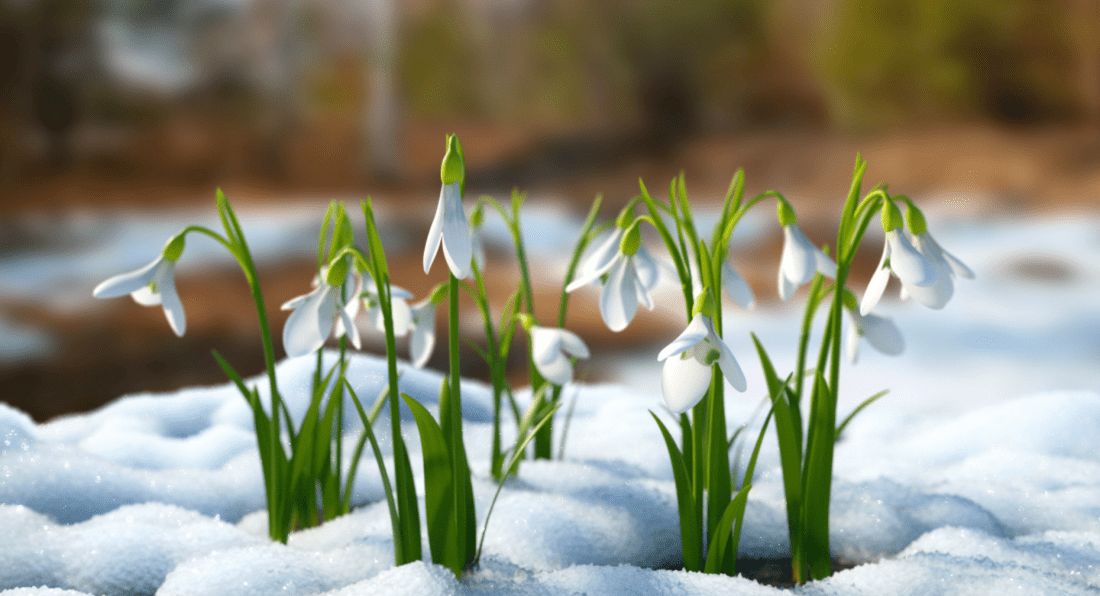
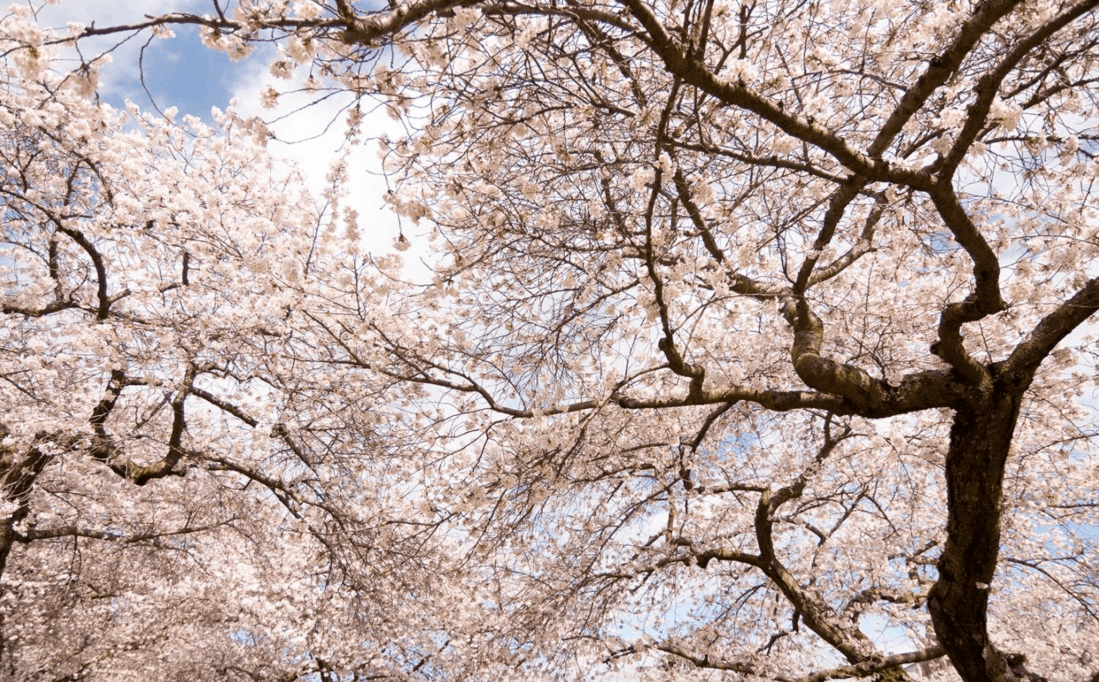
It’s now springtime and the season of dormancy and death is losing its strength. Even as temperatures oscillate and the winds bring sleet one day and thunderstorms the next; that promise of life, hope, and joy is too potent for winter to reign in now! It’s in the air, you can smell it. Life! The birds sense it and sing. The trees feel its presence and begin to venture out of their hiding.

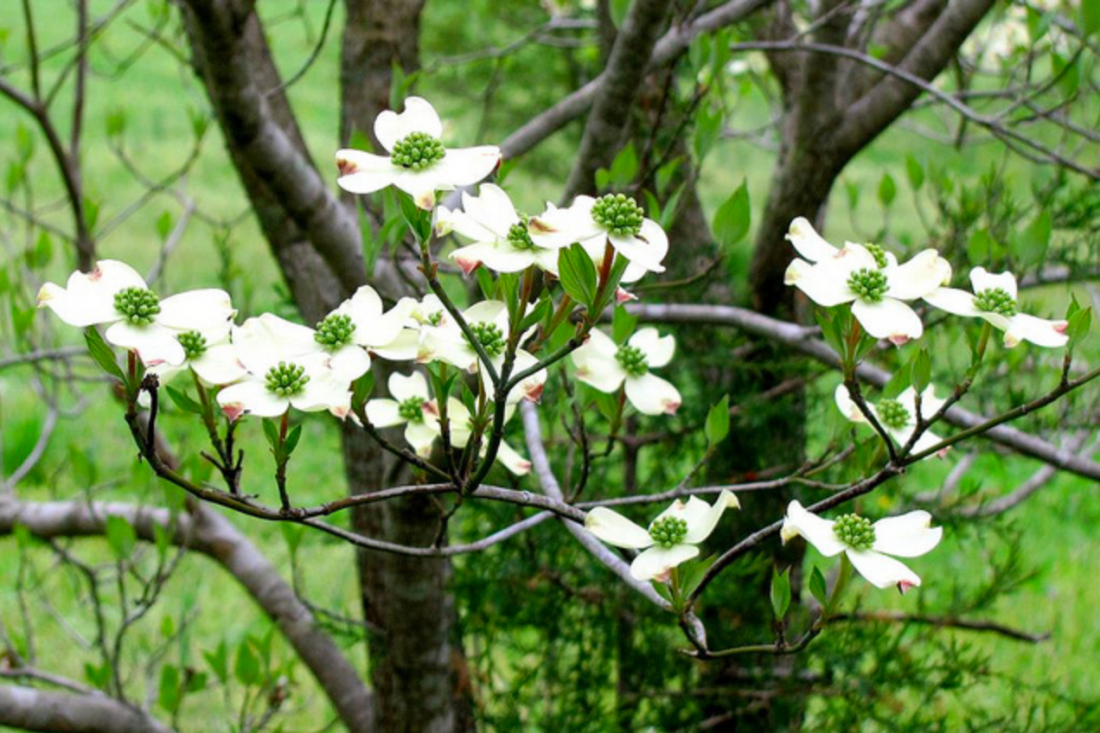
Interestingly, it is the smaller trees that come out first. The redbud and dogwood trees which are boldest, along with the pear. But then their older brothers and sisters are encouraged by the boldness of their siblings and life burgeons forth with increasing determination. Next the cherry, birch, and maple leaf out; followed by the ash, hickory, and mighty oak. That life within is called forth and drawn out by the loving gaze of the sun. And it is the affectionate stare of the sun that stirs that life within and calls each tree forward to be fully itself.  And not the trees only, but all matter of life on earth rises into itself in spring. Called forward by the sun, it obediently and joyfully manifests itself without a second glance back at the sorrows of winter left behind.

Only we humans hold onto the past and are burdened by fears of the future. It is we who are gifted and burdened with an understanding of time. And as such, we are the most hesitant and fearful of all. It is we humans who resist the call forward, who withhold ourselves and linger in a mindset of winter long past its time. And it’s not like we don’t have reason. With knowledge of things past and prediction of things to come, there’s much to be cautious about. But why should we give such things the power to steel away the hope, life, and joy which calls to us today? Why give our ear to the voice of worries and fears when Joy Himself is speaking to us? Let us be taken by the gaze of the sun and obey His call out of winter. 

*Accompanying music for this post is Power of the Gospel, by Ben Harper. Find it at the top right side of this post to listen.

Power of the Gospel, Ben Harper & the Innocent Criminals, Live from Mars

A Prayer for My Grandmother

I received news a number of days ago that my grandmother is in hospice care. She hasn’t eaten for a number of days, and is expected to die soon. My parents went to visit her, to presumably see her for the last time. My mom then went back again. My mom is struggling, and has asked that we pray for my grandmother.

And so, this is my prayer:

She is in pain. Or perhaps it is that she feels the abatement of life. Like what you feel at the start of a sickness. You don’t exactly feel pain but don’t feel fully alive either, and only wish to stay in bed to avoid the pain of movement and responsibilities. And at these times you long for strength, for energy, for the sense of life and health that motivates you to make the most of the day, and take pleasure in it. This isn’t pain exactly, but it’s not life either. It’s more like the way Bilbo Baggins described his feeling in old age… “thin, stretched, like butter scraped over too much bread.”

Undoubtedly it’s both. She probably is feeling pain(s), severe pains… and she is feeling the receding of life. She is suffering, both from pain and a longing for the fullness of life she once experienced and knows exists. God, have mercy. Meet her here in this place where physical pain(s) and the fading of life dominate. Care for her, draw her into Yourself.

Be merciful. She has sought to honor you. She is not perfect, and You (not I) know the ways she has deviated from You in her life expressions. Yet Your mark on her has been evident. In receiving and following direction from Your spirit her life has told Your story. She has rested in You. Be with her now in her time of need.

Give her peace. Not the kind of peace that comes from giving up hope, in order to avoid the pains of longing anymore. Not the peace of emptiness or nothingness, where one gives up the longing and the self along with it. But the peace of fullness and wholeness, of life itself. That fullness of life which she has longed for all her life, but has not been able to grasp. That fullness of life that can only be accepted and received, and not obtained or earned. That fullness of life that takes us into itself, and simultaneously comes in to us. That fullness of life that sustains and strengthens the self even as one surrenders that self to it. Give her that peace.

As she surrenders herself to You for the last time now, sustain and strengthen that self which you have given her. Take her into Yourself, and simultaneously fill her with Yourself… so that she may experience that fullness of life which she has all this time longed for and missed. It is You.

*Accompanying music for this post is O Love That Will Not Let Me Go, by Indelible Grace. Find it at the top right hand side of this post to listen.

O Love That Will Not Let Me Go, Indelible Grace, Side B

Meaningful Connections

Last month my youngest daughter won a prize in a school activity, and in choosing what that prize would be she chose two rings, one for herself and one that she gave to her older sister.

At dinner that night she was excited to show me what she’d won, and to describe the events of the day. She had already given her older sister the other ring, and they both showed me their new and highly valued treasures. I shared their enthusiasm and asked how they were won, and I (along with my wife) celebrated with them both a day well lived. I also shared with them that these rings reminded me of a previous story just two years prior:

Our girls are two years apart and the oldest had just begun kindergarten at the time. As she started kindergarten her younger sister missed her counterpart and playmate for the bulk of each day and was struggling with the separation. As the younger expressed her sense of loss in connection and time with the older sister she shared a desire to give her something… something the older could take with her to school to remember her younger sister by. As I explored the different gift possibilities with her, we came to settle on a pair of rings. One ring that each girl could wear and remember the other one by when they were apart.

So this younger sister got her savings out and we spent the better part of the day going to different shops (4 to be exact) to find the perfect rings for the task. She eventually settled on some that had small flowers on them and made her purchase. I was proud of her as she made this purchase and presented this gift to her older sister later that evening. I was proud of her for struggling with the sense of loss that she felt in the sudden absence of her older sister. I was proud of her for striving to find a way to maintain that meaningful sense of connection with her sister in the midst of changing circumstances that imposed their separation. I was proud of her for giving serious consideration to what kind of gift would be most appropriate for the task (which reflects the meaning of the gift itself). I was proud of her for spending her own money on the gift, as all meaningful connections and relationships involve sacrifice… a giving of oneself to and for the other. And I was proud of both girls in their mutual love for and valuing of one another in the whole exchange.

I think the rings lasted about a week before they were lost. But the sense of growth and connection these items played a small role in facilitating has a continuity far exceeding any material object. That growth and connection is now rooted in the lives they live today, and serves as a foundation on which more connections and growth continue to build.

*Accompanying music for this post is (Not Fire, Not Ice), by Ben Harper. Find this song in the upper right hand side of the screen to listen.

Not Fire, Not Ice, Ben Harper & the Innocent Criminals, Live from Mars

A Daughter’s Question

A couple years ago I was driving my daughters to school early in the morning as the sun rose. We had just finished listening to the song Down with the Shine by the Avett Brothers when my oldest daughter posed a question:

Dad, were the Avett Brothers there when Socrates speeched his speech?

A beautiful question I’ll never forget… she was six or seven at the time! Soooo, clearly there’s a backstory. A week or so before we had been listening to that same song and she was trying to understand what it meant.

Down with the shine, the perfect shine
That poisons the well, and ruins my mind
I get took for a ride, every time
Down with the glistening shine

As we (my two daughters and I) talked about it I shared that the song centered on a truth that Socrates expressed a very long time ago in Plato’s Gorgias (462b-466b); that life presents to us those things which are good for us (that enhance our health, growth, development, and thriving), but that those good things have parallel counterfeit flatteries (various counterfeits of the good which “give the appearance of health and not the reality”). So, we discussed how a flattery operates by creating an experience of delight or gratification, and in that way distracts us from that which really is the highest good.

As you might imagine, an example was needed for my daughters to understand (or begin to understand). Fortunately, Plato provided us with one especially helpful for children. I shared that the main example Socrates used was a distinction between food that is healthy for a person’s body (or actual food) and that which is prepared only for pleasure (such as candy, cakes, other sweets and/or processed foods for example).

I then asked my daughters “what would you rather have to eat? Spinach salad or chocolate cake?”

Both smiled broadly and expressed “CAKE!”

So I then followed up, “but which is good for your body to grow healthy and strong?”

… And then they understood. I told my daughters how Socrates made this exact point, that we tend to judge a thing as good/bad by our immediate and temporal experience of it (whether it is gratifying to our senses or not), rather than what is actually good and healthy (but tastes like salad).

So we talked about how this is what the Avett Brother’s are singing about in Down with the Shine. That the Shine reflects those counterfeits, the flatteries which distract us and lead us away from “the good” that is for us. And then something remarkable happened! My oldest daughter made the connection (all by herself!) to advertisements at the grocery store, which get us to spend more money on macaroni and cheese that comes in a flashy colorful box rather than the same product in a plain box for less money. She got it!

So now we have a running joke in the family… when I ask our girls what their favorite desert is, they respond enthusiastically with “SPINACH!” I love it… Then I give them some cake. For the record, we do have a special love for spinach in our family.

Lastly, the answer to her question was no, the Avett Brothers were not there when Socrates speeched his speech. But they probably read about it.

*Accompanying music for this post is obviously Down with the Shine, by the Avett Brothers. Find it in the top right portion of the blog to listen.

The Avett Brothers, Down with the Shine, The Carpenter

The Joy Unto Life

Earlier this week I had the chance to spend some time in good discussion with friends. The topic of discussion, spurred on by the burgeoning spring season, was the seed. And both in our discussion and my personal reflection on the seed it became clear that the essence of the seed is potential. Within the seed is so much potential… but that potential is yet to be realized. And that potential (seed) may or may not be realized, depending on what is done with it. This is one important theme of Jesus’s parable of the soils (or parable of the sower) in Mathew 13 (and other places). In reflecting on potential as the essence of the seed and what it means for the self, I recalled:

…the self is just as much possible as necessary; although it is indeed itself, it has to become itself. To the extent that it is itself, it is necessary; and to the extent that it must become itself, it is a possibility [or potential]…. Surely what the self now lacks is actuality…. [Yet] it is not the case… that necessity is a unity of possibility and actuality; no, actuality is the unity of possibility [potential] and necessity.

Kierkegaard, The Sickness Unto Death, p. 66

So in understanding the self, there are three concepts here to grasp: potential, necessity, and actuality. Who one is in actuality is a synthesis of one’s potential self, or what one could be, with one’s necessary self, or who one is now. Another way to put this is that one’s essence in actuality is the marriage of what one could be (potential) with what one is doing now (necessity), because what one is doing now either brings into being that potential (making it actual), or it does not… in which case the seed (one’s potential) is wasted. So the essence of one’s self is not only who one is today, but it is also that self that one is becoming… which depends upon one’s actions and decisions today. The self that clings to possibility but does not yield to the necessary steps it takes to realize that possibility, loses itself.

Here the self becomes an abstract possibility; it exhausts itself floundering about in possibility, yet it never moves from where it is nor gets anywhere, for necessity is just that ‘where’.

Kierkegaard, The Sickness Unto Death, p. 66

So it is the synthesis of possibility and necessity that is the essence of the self as it unfolds within the dimension of time.

But what if we consider the self from another dimension, one of a higher order… that of consciousness? For a self cannot possess the will to synthesize one’s potential in the future with one’s actions and decisions in the present apart from consciousness. Here within the dimension of consciousness, the self in actuality is the synthesis of the infinite with the finite.

The self is the conscious synthesis of infinitude and finitude, which relates to itself, whose task is to become itself, which can only be done in the relationship with God. To become oneself, however, is to become something concrete. But to become something concrete is neither to become finite nor to become infinite, for that which is to become concrete is indeed a synthesis.

Kierkegaard, The Sickness Unto Death, p. 60

These two dimensions of the self are isomorphic: Just as the self in time is a synthesis of one’s potential with one’s necessary actions and decisions today, the self in consciousness is a synthesis of the infinite (soul… and its potential) with the finite (body… as the necessary element). But necessary for what?… The body (finitude) is necessary for the soul’s (infinitude) expression of its potential. And that expression is the self.

Just as it is true that the ripe tomato on the vine is a synthesis of the seed (potential) and the (necessary) elements [soil, water, sunlight], the self too is a synthesis of the seed from the infinite (soul… and its potential) and the necessary (finite) element [the body]. Our language expressions of Father God and mother earth are no accident, though we seldom consciously reflect on their meaning. There is a clear sexual image here, a marriage of the infinite with the finite in which their union produces oneself. And oneself is created when the seed of “the One” from the infinite (soul) is implanted within the soil of the earth (body).

In the synthesis between the soul (infinite) and the body (finite), that infinite potential works within the necessary finite to formulate the best possible expression of itself that it can. And the first task in necessity is to develop that vehicle by which one’s potential may be expressed. And that’s exactly what happens! That breathe of life (spirit) in us, which is conceived at the synthesis, moves to organize and formulate the body utilizing the material it is given to work with.

That breath of life unpacks the genetic material passed down in the finite and begins to utilize it as the blueprint for constructing the body. And that genetic material is a significant part of the expression of other selves passed down from generation to generation, streamlining and improving on past designs within the finite in order to maximize that potential expression of this self in development now. So each individual has an expression (self) to make, but the collective human race is likewise contributing to ever clearer, culminating, maximized, and diverse expressions of the infinite over time too. Why diverse? Well because the infinite cannot be grasped or contained by the finite… the material is too limiting, and so the unity that is the infinite must find unique and diverse expressions in the material world to maximize the potential in those expressions (selves). And together, the many diverse expressions find harmony and unity in their song of the infinite (God, or “the One”).

And so that breath of life (spirit) unpacks the genetic material and gets to work, developing that body by which it is to find its expression. As the spirit moves to construct the body it finds necessary the addition of material to work with (food, etc.) by which it constructs the body for its expression. And yet even now, in constructing that body, the spirit finds an expression. And that expression is the self now in necessity, but synthesized with the potential of what it could be in the future. And it is this synthesis of necessity and potential, of the now and the not yet, it is this spirit which is conceived in the union, which pushes the self within an infant forward in development (motor development, cognitive development, emotional development, moral development, language development, psychosocial development) up through childhood and in to early adulthood.

Kierkegaard presented us with three stages along life’s way: The aesthetic, the ethical, and the religious. And he was right that the aesthetic is necessarily the first stage in life by which the self finds its expression in the developmental process. In order for the spirit to develop that self by which it will maximize its potential expression in the future, it makes the body its primary focus during childhood. In childhood, it is the development of the body which is necessary for maximizing the future self’s potential expression. And so, the aesthetic is the means by which the body maximizes in development. And as that development occurs the potential of the soul (infinite) regenerates itself in the body (finite), for it creates potential within the body itself as a vehicle by which it may maximize its expression (self) in the world.

Still, that potential now generated within the body must be harnessed by necessity in order to actualize its infinite expression (and not be hijacked for merely finite expressions). And so the self enters a new stage intended to harness the potential within the body, the ethical. And this is exactly what happens! As a child grows and enters adolescence and then young adulthood, gradually more and more emphasis and energy is directed toward moral and ethical responsibilities in order to harness the potential within the body and steer it in the right direction. More energy is given to self-discipline in order to maximize the potential which has been generated in the body.  

And the last and final stage is that ultimate expression in which the body with all its potential aligns properly with the soul in all its potential, which aligns properly with the One in all His potential (which is infinity itself), unifying the infinite with the finite in so powerful a way that its euphoric expression (which is worship) generates ever more life. How does this happen? It occurs as one’s self reaches the culmination of its expression, the limits of its capacity and comes to recognize that it is not enough,  and can never possibly be enough. For how could the finite possibly capture and contain the infinite? And so the self recognizes its empty state and lays itself before “the One”, yielding to that which is beyond itself. And by laying itself down, it receives life freely.

Again, a clear sexual image emerges here, as the One fills one’s self with His Holy Spirit. And that Holy Spirit produces fruit within the self, what is called the fruit of the spirit (love, joy, peace, patience, kindness, goodness, faithfulness, gentleness, self-control) [Galatians 5: 22-23]. And that union, that worship, is both expressive and submissive without limits in its infinity, but limited only by the capacity of the finite within the self. So in time, the finite within the self gives way, fully yielding to the power of the infinite within, and in death lays itself down in full submission to that greater power which cannot be contained.

When my feeble life is o’er
Time for me will be no more
Guide me gently, safely o’er
To Thy kingdom’s shore, to Thy shore

*Accompanying music for this post is Just a Closer Walk with Thee, performed by the Avett Brothers at Virginia Tech in 2012. I attended this show with two good friends and this song was the highlight. You can have a listen by finding it at the following youtube link (and you get to watch the performance of this song too).

Avett Brothers- Closer Walk with Thee

The Moment

An important distinction is to be made between living in the moment and living for the moment. One living for the moment seeks one thing, that which gratifies the needs and desires of the self, the aesthetic. It is the way of the opportunist, each moment seeking one’s own.

Eat, drink, and be merry, for tomorrow we die.

The moment is all we have, we are not guaranteed another, so we must make the most of it.

In living for the moment one moves through life from pleasure to pleasure with increasing despair in the gaps. The absence of pleasure is despair and meaninglessness, it is suffering, it is pain, it is everything that one must escape. Desperate for escape, one living for the moment settles for easy, short term pleasures at a cost to the good of the self. Dependent on and needy of pleasure, this one takes pornography at the expense of intimacy, control at the expense of trust and hope, certainty at the expense of truth, distraction at the expense of discipline. Here there is no growth, one who lives for the moment seeks to escape what is for the pleasures that might be.

In contrast, living in the moment involves fully accepting what is (be it the greatest joy or the deepest pain) and working within it for life, beauty, love, and redemption. Living in the moment requires discipline and intentionality. It is a full commitment to the good in the face of the many distractions, escapes, and easy ways that constantly present themselves to an individual. It is a commitment to the good for its own sake, for one who lives in the moment does not know whether he/she will have tomorrow to enjoy its rewards. It gives no care for tomorrow, for its worries and endless considerations… not because it avoids responsibility, but because it knows that its only real responsibility is what it has been given this day to work with.

*Accompanying music for this post is Awake My Soul, by Mumford and Sons. Check it out at the top right side of the screen.

Mumford and Sons, Awake My Soul, Sigh No More

Keep on Keeping on

Just this past weekend the Banff Mountain Film Festival came to my town, a film festival that I have enjoyed attending for about 20 years now. The films center on mountain culture and outdoor adventure, and often serve to inspire personal and relational growth in the pursuit of bold and courageous goals. I recall a film that I watched at this festival a couple years back that focused on the Colorado river. This film followed the adventures of two men who sought to kayak the river from its source as snow melt in the Colorado Rockies all the way through the Grand Canyon and down to its end in the Gulf of California (Mexico).

As the film followed these two adventurers, the crux of their journey came in the last 100 miles before reaching the Gulf, where the river itself ended… not reaching its culminating end in the Gulf of California. Following these two men as they completed their journey on foot I learned that the Colorado river hadn’t reached its end in the Gulf since the 1960’s, and that this is because 70% of the river is consistently siphoned off to provide water for farms and cities all across the Southwestern US (including California, Arizona, Nevada, Wyoming, Utah, Colorado, and New Mexico).

Likewise, the life within each of us is strong and powerful like the Colorado river. That life breathed into us from the One is divinely inspired and seeks its culminating expression in the world (just as the Colorado river seeks the Gulf of California). And the world is such that there is a never-ending number of entities that wish to draw from that life, many in order to source their own expressions in the world, and some simply for the sake of depleting the life found within us. Generally speaking, we are able to identify those siphons that are not worthy of our strength… that dissipate our strength without producing anything of value in the world. These we generally regard as immoralities, or wrongs… Christianity uses the term sin. We are generally able to identify these siphons for what they are, though we often struggle to cut them off (stopping them from siphoning off our strength and life which is seeking a more worthy and culminating expression in the world).

And while these life depleting siphons can be challenging to cut off, what are often even more challenging are those that wish to draw from that life within us in order to source their own expressions in the world. These are more challenging because they are very often worthy causes, and the world is full of countless numbers of worthy causes. The challenge is, that if one allows his/her strength to be siphoned off for any and all worthy causes that present themselves, that one will never reach his/her own culminating expression in the world… that which uniquely belongs to him/her. Here, one’s own life/strength becomes so diffuse so quickly that it ceases to exist altogether… becomes only a shadow of a self.

This is a problem because the One has breathed that life, that energy, that strength into that particular individual… and each one of us as particular individuals. He has entrusted each individual with that life to cultivate, grow, protect, and steward it so that it can reach its culminating expression. It is a matter of stewardship, each individual is responsible to safeguard and protect that strength within them, to direct it towards its culminating end. And this requires the ability to say No to otherwise worthy causes.

I do not mean to say that all who wish to draw from us should be cut off, but I do mean to say that one neglects his/her responsibility before the One when choosing to not value and honor that life (within the self) properly… when he/she gives it away to all others indiscriminately. There is a responsibility to discern those worthy and noble causes which align with and compliment/enhance one’s own culminating expression from those which are altogether different/distinct. And those which are altogether different/distinct we need to be able to say no to, while still honoring and appreciating them for what they are. In so doing, we preserve and honor that life/strength which has been given to us as individuals to cultivate and express. And in doing this, we become a source of life/strength and beauty in the world that has a far greater impact than that which allows itself to become diffuse. The expression of that strength becomes ordered and cultivated, a sustainable source of life for others that culminates in something far greater than itself.

…while one kind of despair steers blindly in the infinite and loses itself, another kind of despair allows itself to be, so to speak, cheated of its self by ‘the others’. By seeing the multitude of people around it, by being busied with all sorts of worldly affairs, by being wise to the ways of the world, such a person forgets himself, in a divine sense forgets his own name, dares not believe in himself, finds being himself too risky, finds it much easier and safer to be like the others, to become a copy, a number, along with the crowd.

Kierkegaard, The Sickness Unto Death, p. 64

*The accompanying music for this post is My Silver Lining, by First Aid Kit. Find this song at the top right of the site.

My Silver Lining, Stay Gold, First Aid Kit


In His Image

A while back I posted A system for Approaching the World, my first philosophically oriented post that outlined my view of human nature, how to live a good life, and how I understand our drives, needs, pain and suffering in the world. In that post I shared the metaphysical grounding of this approach which is rooted in tenants of the Christian faith, particularly in a) its articulation of God (the creator) as triune in nature: God as One, but in three persons (Father, Son, Holy Spirit); and b) that human beings are made in His image (which I take, among other things, to indicate a triune nature in human beings: soul, spirit, body). I’d like to here expand on how I’ve come to view the structure of human beings as isomorphic to that of God.

The key passage that has led me to this understanding is found in the beginning…

Then God said, “Let Us make man in Our image, after Our likeness: and let them rule over the fish of the sea and over the birds of the sky and over the cattle and over all the earth, and over every creeping thing that creeps on the earth.” God created man in His own image, in the image of God He created him; male and female He created them.

Gensis 1: 26-27

A number of years ago I was reflecting on this passage and was struck by the realization that it is the trinity talking here with and within itself. In the decision to make man, and to make man in His image, there is clear intention to draw the reader to the triune nature of God in the use of plural language when referencing Him (“Us,” “Our image,” and “Our likeness”). And it is wholly consistent that if this triune nature of God is centralized and highlighted in the stated intention to make man in that image, that this triune nature would be centralized and highlighted in man (who was made in that triune image). This truth I see with a clear and distinct perception in relation to the passage.

Simultaneously, while reading this passage I was very much aware of the different aspects of human nature articulated as soul, spirit, and body in scripture/ and the distinction between soul and body in philosophy:

Now may the God of peace Himself sanctify you entirely; and may your spirit and soul and body be preserved complete, without blame at the coming of our Lord Jesus Christ.

1 Thessalonians 5: 23

Plato’s distinctions between soul and body: The Republic, X, 608ff; Phaedrus (the chariot allegory of the soul).

Descartes distinction between soul and body: Discourse on Method (Part 4); Meditation II (Of the Nature of the Human Mind; and that it is more easily known than the Body).

The distinction between the human soul and body I felt I had clarity on, but the distinction between soul and spirit was more confusing to me. This is in large part due to the manner in which both scripture and philosophy often utilize the two terms interchangeably. Still, I quickly recognized three leads on this front (distinguishing soul from spirit): the first being to look to the relation between the Father, Son, and Holy Spirit within the trinity, the second being found in Hebrews 4:12, and the third being to examine the words (as used in Hebrews 4:12 and 1 Thessalonians 5:23) in their Greek roots. 

In examining the relation between the Father, Son, and Holy Spirit there are a number of passages that can be examined, yet the most helpful passages to me are:

Therefore Jesus answered and was saying to them, “Truly, truly, I say to you, the Son can do nothing of Himself, unless it is something He sees the Father doing; for whatever the Father does, these things the Son also does in like manner.

John 5: 19

For I did not speak on My own initiative, but the Father Himself who sent Me has given Me a commandment as to what to say and what to speak.

John 12: 49

“When the Helper comes, whom I will send to you from the Father, that is the Spirit of truth who proceeds from the Father, He will testify about Me…”

John 15: 26

In each of these passages Jesus (the Son) makes clear that he is the manifestation here on earth of the will of His Father. The Father is the one who wills, and He (the Son) is the expression of that will in the finite, temporal world. We also see that the Holy Spirit proceeds from the Father and the Son, yet even as the Spirit proceeds from the Son, the Son sends the Spirit from the Father. There is an order of authority here which Jesus is careful to follow: The Father wills, and sends the Spirit with that will to the Son, who empowers the Son to express that will in the finite, temporal world. And then as Jesus obeys he likewise sends the spirit back to the Father in adoration and love. And in John 15:26 He (the Son) sends the Spirit back to the Father with His (the Son’s) will as a request… that the Father send the Spirit to His (the Son’s) followers to testify to Him (the Son). As such, the Spirit is the mediating entity between the Father and the Son. As such, I took the relation between the human soul, spirit, body to be the same. The soul is the seat of human will, intellect, authority; the body is the expression of the soul’s will in the finite, temporal world; the spirit is the mediating force which proceeds from the soul to the body and then back again to the soul.

Following the second lead about the distinction between soul and spirit I examined the passage in Hebrews:   

For the word of God is living and active and sharper than any two-edged sword, and piercing as far as the division of soul and spirit, of both joints and marrow, and able to judge the thoughts and intentions of the heart.

Hebrews 4: 12

Here I found parallels to follow: soul/joints and spirit/marrow. Considering these relations further I recognized the joint as a hinge that connects one bone to the next, as the soul is that hinge that connects the finite to the infinite, the temporal to the eternal, the physical to the spiritual. And likewise I recognized the marrow of the bone to be that internal place in which blood cells (the lifeblood of the body) are produced, as the spirit is the lifeblood of the body empowering it towards its culminating expression.

Following the third lead in distinguishing the soul from the spirit (and what the heck, the body too) I looked up definitions for each term. It appears to me that each definition speaks for itself and generally corresponds to (or at least does not negate) those distinctions already discovered in the previous 2 leads: 

Psuché (psyché): the soul, life, self, breath/ a) the vital breath, breath of life, b) the human soul, c) the soul as the seat of affections and will, d) the self, e) a human person, an individual. (ψυχή, ῆς, ἡ) [Part of Speech: Noun, Feminine]

Pneuma: wind, breath, spirit/ the vital principle by which the body is animated/ the spirit is that which animates and gives life, the body is of no profit (for the spirit imparts life to it, not the body in turn to the spirit; cf. Chr. Frid. Fritzsche, Nova opuscc., p. 239) (πνεῦμα, ατος, τό) [Part of speech: Noun, Neuter]

Sóma: body, flesh, the physical body; the body of the church.( σῶμα, ατος, τό) [Part of speech: Noun, Neuter]

These are the Greek terms used in Hebrews 4:12, and 1 Thessalonians 5:23 for soul, spirit, and body respectively

One question that might be raised is in relation to the feminine part of speech for the soul (Psuché). The key point in addressing this apparent confusion is in recognizing that the soul is not feminine in relation to the human spirit and body, but rather it is feminine in relation to that which created it (God). This adoption of a feminine part of speech for the human soul highlights the ontological distinction between the two (God and human), and likewise highlights that God’s is a necessary existence while human beings exist in an contingent existence

So taking all of this into consideration I’ve continued pondering the interrelation of these three aspects of the human being (soul, spirit, body), understanding them from the Genesis passage to be isomorphic to the triune God. And as I pondered their interrelations I began to read Kierkegaard’s The Sickness Unto Death, and I found immediate confirmation and alignment of my considerations of the soul, spirit, body relations as Kierkegaard described the human spirit:

The human being is spirit. But what is spirit? Spirit is the self. But what is the self? The self is a relation which relates to itself, or that in the relation which is its relating to itself. The self is not the relation but the relation’s relating to itself. A human being is a synthesis of the infinite [soul] and the finite [body], of the temporal [body] and the eternal [soul], of freedom and necessity. In short a synthesis. A synthesis is a relation between two terms. Looked at in this way a human being is not yet a self.

In a relation between two things the relation is the third term in the form of a negative unity, and the two relate to the relation, and in the relation to that relation; this is what it is from the point of view of soul for soul and body to be in relation. If, on the other hand, the relation relates to itself, then this relation [spirit] is the positive third, and this is the self.

Kierkegaard, The Sickness Unto Death, p. 43-44

This is a potent and powerful expression of the relation between the soul, spirit, and body. The soul and body are distinct, and the spirit is found in the synthesis between the two.

An example: Much like when a husband and wife get married they create a third entity, the relationship itself, and they are both in relationship to one another and both in relationship to the relationship itself. And the relationship is more than the sum of its parts, you cannot simply add the qualities or strengths of each individual together and generate this… it is rather multiplied and not added. The two together create a third entity that is altogether different. And that third synthesizes the relation of the two, binding them together intensely. Each individual will often act for the good of the relationship (even if it is not what either individual wants), which in turn rewards them with its own benefits. And we call this a spiritual connection between the two, rightfully so… because as the relationship grows it becomes more itself, that is, its spirit is manifest in its relating to itself… and in so doing it unifies the two.   

This is how I came to understand the relation between the human soul, spirit, and body. It is by design isomorphic to the triune God and as such, the interrelation of its parts mirror the interrelation among the components of the trinity (Father, Son, Spirit). The human soul is the seat of the will, the intellect, the immortal aspect of humankind that acts as a hinge between the finite and infinite realm, pondering that which is true, noble, right, pure, lovely, and admirable of “the One” and willing that these wonders be expressed in the finite world. The human spirit emanates from the soul as that breath of life in the body, moving it towards that culminating expression. The body, moved by the spirit, works toward the expression of that will (and vision) cast by the soul. And as the body moves as that expression it sends the spirit back to the soul in love and obedience, seeking further clarity and direction in honing that expression. At least that is the design…  

*Accompanying music for this post is “Lost in My Mind” by The Head and the Heart. Give this song a listen by scrolling to the top right side of the blog to find it in the accompanying music.

The Head and the Heart, Lost in My Mind